Eleven small coins, buried for roughly 2,000 years, are giving researchers a fresh way to think about Europe before the Roman Empire took over. By the end of this article, you'll know what was found, why a tiny hoard can matter so much, and how to read a coin find like an archaeologist.
What was found, and where
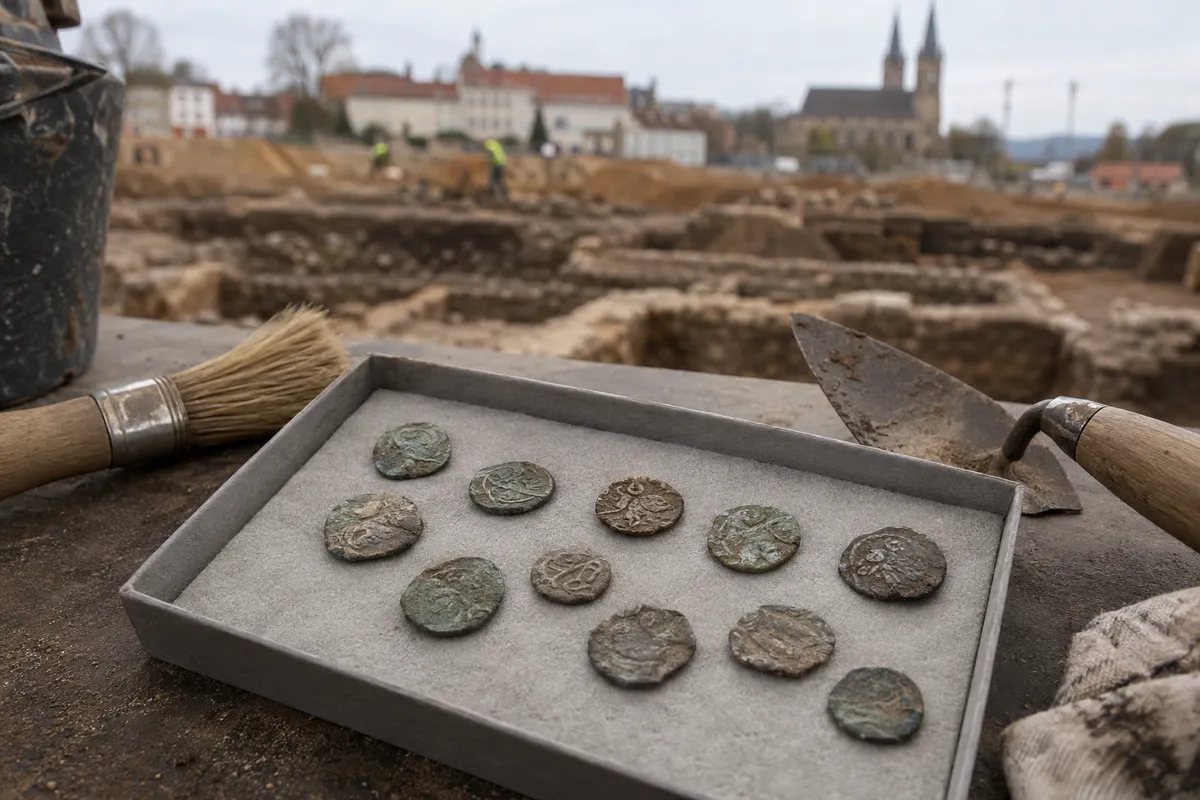
Archaeologists in central Germany uncovered a hoard of 11 Celtic coins dating to the first century B.C., per Fox News. Researchers describe it as the largest known find of its kind in the region.
The setting is almost comically ordinary. The team was excavating a former sports field ahead of construction of a new fire station. Nobody was hunting for treasure; the dig happened because building was about to begin.
That's the first useful lesson. Major history often turns up not in famous sites but under places we've long treated as plain ground.
Why a construction site can be an archaeological site
Before a project breaks ground, the land may be surveyed or excavated so that anything buried can be recorded rather than destroyed. This find is an example of how that process can pay off. Modern infrastructure sits on top of centuries of earlier human activity, and each new project is a chance to see a slice of it.
If you're curious about your own area, you can often learn about local digs by checking with your regional heritage or archaeology office. Findings like this one tend to be reported only after specialists have examined them, so patience helps.
What coins can tell us that other objects can't
Coins are small, durable, and made with intent. That makes them unusually good evidence. Researchers believe this hoard could shed light on ancient Celtic trade networks and communities across Europe, according to the report.
Here's the general logic of how coins do that work:
- Where they were made versus where they were found. A coin that traveled suggests people, goods, or payments did too.
- Their designs. Images and styles can hint at which communities produced them and how those groups saw themselves.
- How they were buried. A group of coins left together suggests a deliberate act, which can open questions about savings, safekeeping, or other purposes.
The report doesn't detail the specific designs or origins of these 11 coins, so what they will ultimately reveal remains for researchers to say. But these are the questions a find like this lets them ask.
Why 11 coins is a bigger deal than it sounds
Eleven isn't a dramatic number, and that's the point. Because it's the largest known hoard of its kind in the region, it works as a rare data cluster where there was little before. One or two stray coins can be a fluke. A set found together gives researchers something to compare, count, and place on a map.
It's our analysis, not a claim from the researchers, but this is how modest finds can shift a picture: they don't need to be glamorous, only to fill a gap.
The bigger picture: mapping Celtic Europe
The discovery adds to ongoing efforts to map Europe's pre-Roman Celtic economy and cultural connections. The Celts weren't a single tidy empire, and the evidence we have comes in pieces. Each find nudges the map a little, showing where communities lived and how they were linked by exchange.
Think of it like assembling a puzzle without the box lid. Any new piece, even a small one, helps you guess what the whole image looks like.
How to follow a find like this
When the next "ancient hoard" headline appears, a few questions will help you judge what it really means:
- How many items, and how does that compare to other finds nearby? Scale relative to the region matters more than raw numbers.
- What date range do researchers give? Here, it's the first century B.C.
- What circumstances led to the discovery? Planned digs and construction surveys tell different stories.
- What are researchers saying the find could show, versus what it has shown? Early reports often describe potential, not conclusions.
The takeaway
The ground under a parking lot, a ball field, or a future fire station may hold a chapter of history nobody has read yet. Next time you see a construction fence, remember that the past is often right underneath, and that a handful of coins can be enough to start reading it.