By the end of this article, you'll understand one of physics' deepest puzzles, why there is something rather than nothing, and how a particle that has been overlooked for decades might help solve it.
Per a report from Phys, physicists have proposed a new theory of the early universe. In it, a long-ignored "decoupled" heavy neutrino briefly dominated the universe's energy density after the Big Bang. That brief takeover, the researchers suggest, may explain why matter outlasted antimatter, which is the reason stars, planets, and you exist.
Think of it as a cosmic cold case: the crime scene is the whole universe, and a suspect nobody questioned may finally be getting a look.
The puzzle: why didn't everything vanish?
Here is the problem. Matter and antimatter are meant to be mirror-image partners. When they meet, they annihilate. If the early universe had treated them perfectly equally, they would have wiped each other out, leaving little but light.
Obviously that didn't happen. Some matter survived. Per Phys, the matter-antimatter imbalance remains one of the biggest unanswered questions in physics. Any explanation has to account for how a tiny edge for matter got established and then preserved.
The suspect: a heavy neutrino that "decoupled"
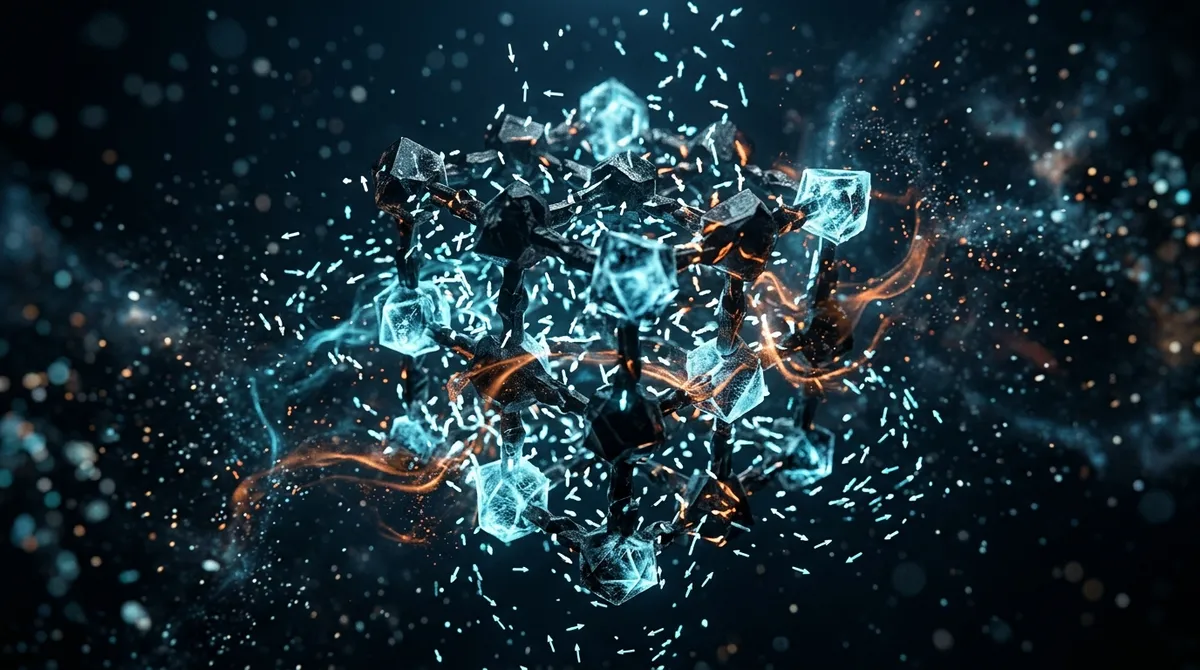
Neutrinos are famously elusive particles that barely interact with anything. The proposed particle is a heavy neutrino, and the key word in the report is "decoupled." In plain terms, it stopped interacting much with the rest of the early universe's contents and went its own way.
According to Phys, physicists say this kind of particle has been overlooked for decades. The new theory puts it back at the center of the story.
The twist: it briefly ran the show
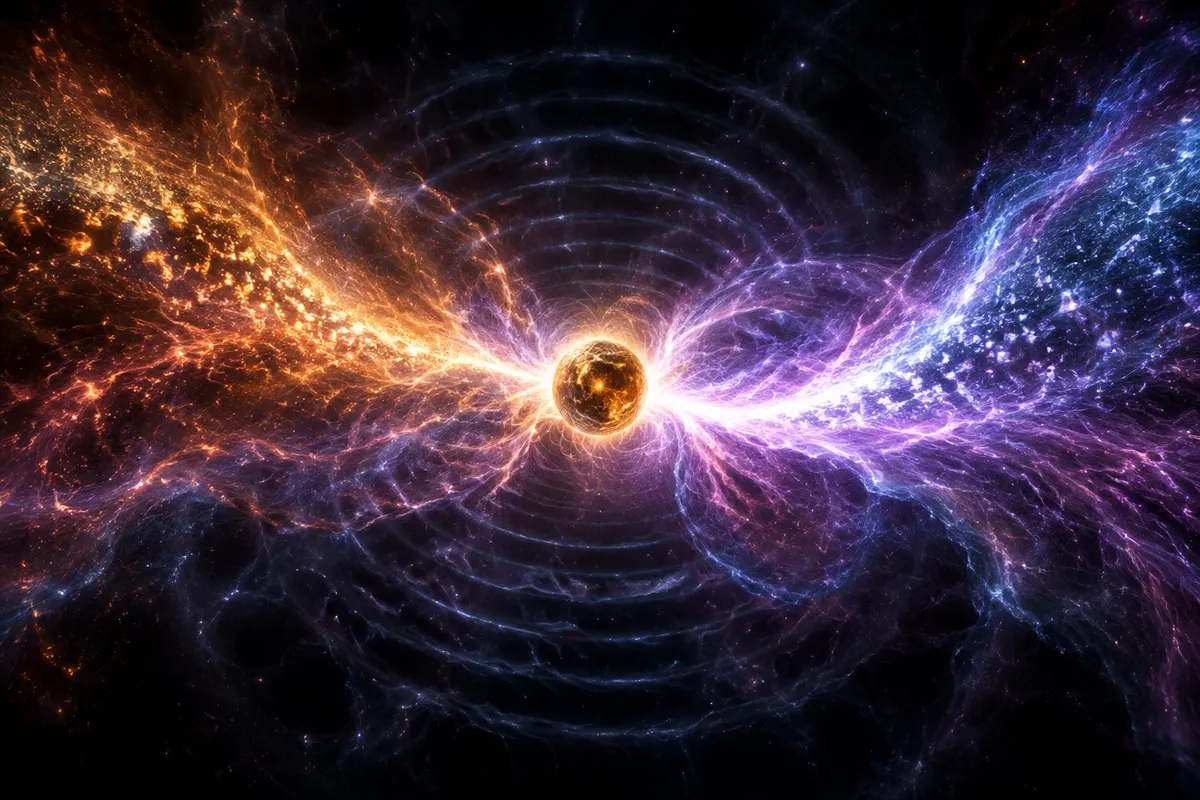
The central claim is that this heavy neutrino may have briefly dominated the universe's energy density after the Big Bang. In other words, for a short stretch, this one particle type made up the bulk of what the young universe contained.
That matters because whatever dominates the energy of the universe steers how it evolves. A period like this could change the conditions under which matter and antimatter ended up out of balance. Per the report, the theory offers a new explanation for why matter won out.
I'll flag the limits here: this is a proposed model, not a confirmed result. The details of the mechanism go beyond what the Phys summary lays out, so treat this as the outline of an idea rather than settled physics.
How you'd test it: ripples from the beginning
A theory about the first moments of the universe sounds untestable, but the researchers point to a possible route: primordial gravitational waves. These are ripples in spacetime thought to date from the very early universe. If a heavy neutrino really took over the energy budget for a time, it could leave a mark on those waves.
That gives the idea something every good detective story needs: a way to check the alibi. Detecting such a signal would be a major challenge, and nothing in the report says it has been found. But a testable prediction is what separates a speculative story from a scientific hypothesis.
Why this is worth following
A few reasons this idea deserves your attention:
- It targets a foundational question. Without a matter surplus, no galaxies, no chemistry, no life.
- It revives something old. The suspect was already on the books; physicists say it had simply been neglected.
- It can be checked. Primordial gravitational waves offer a possible way to confirm or rule it out.
What to do with this
When you next see a headline about a "new theory of the universe," ask two things: what does it explain, and how could it be tested? This one passes both: it targets why matter exists, and it names primordial gravitational waves as a possible test. Watch for future gravitational-wave results, because that is where this cold case could finally be cracked or closed.