
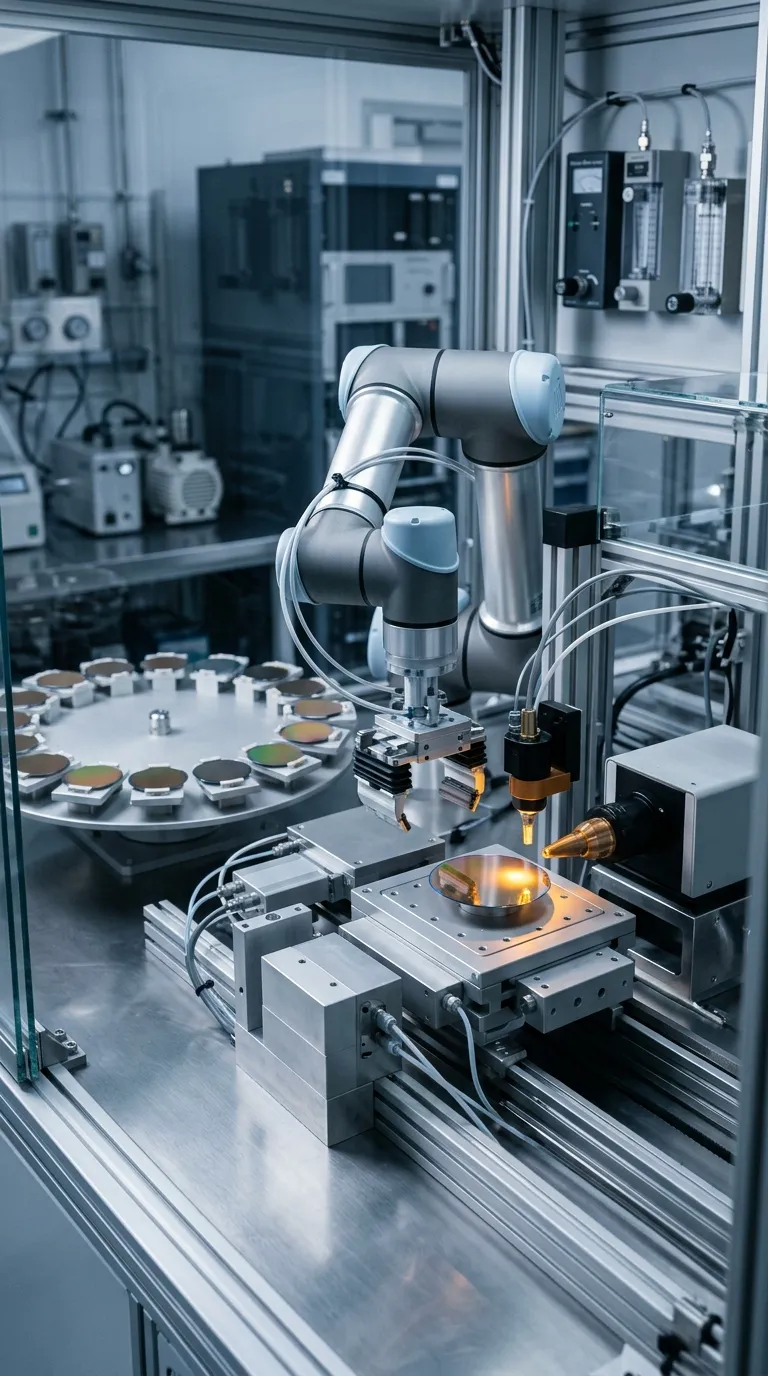
Recent advancements in lab automation are reshaping the landscape of semiconductor research. The Karlsruhe Institute of Technology (KIT) has unveiled its Energy Materials Acceleration Platform (E-MAP), a self-driving lab designed to enhance the synthesis and characterization of semiconductor inks and thin films. This innovation not only promises to speed up the discovery of functional materials but also improves precision and reproducibility in experiments.
The Problem with Traditional Methods
Traditional lab work for developing new semiconductor materials has relied heavily on trial-and-error methods. This approach is often slow, labor-intensive, and can lead to inconsistencies in results. As demand for advanced energy and semiconductor materials escalates, it's clear that a new methodology is necessary to keep pace with the growing industry needs.
How E-MAP Works
E-MAP automates several critical processes involved in semiconductor research:
- Semiconductor Ink Synthesis: By automating ink production, the lab ensures consistency in the quality and composition of materials.
- Thin-Film Deposition: The platform uses robotics to deposit layers of material with precision, a crucial factor in semiconductor functionality.
- Sample Handling and Characterization: With robotic sample handling, researchers can efficiently manage and analyze numerous samples without the typical delays.
By integrating these automated processes into a single modular platform, KIT's E-MAP facilitates a faster experimental cycle. Researchers can test more formulations than ever before, leading to quicker iterations and discoveries.
Advantages of Automation in Semiconductor Research
- Increased Speed: By eliminating the bottlenecks associated with manual handling, researchers can conduct more experiments in less time, allowing a rapid exploration of potential materials.
- Improved Precision: The robotics used in E-MAP allow for precise control over variables, reducing the noise common in human-operated experiments.
- Enhanced Reproducibility: Automation minimizes human error, leading to more consistent results that scientists can rely on in their research.
The enhancements seen in the E-MAP facilitate a shift away from traditional labor-intensive methods toward a more streamlined, data-driven approach.
The Future of Scientific Research
The rise of self-driving labs like E-MAP signals a transformative shift in scientific research methodology. As industries increasingly rely on AI and automation, researchers may find themselves focusing less on routine tasks and more on higher-level analysis and innovative design. This shift not only boosts efficiency but also opens new avenues for scientists to explore complicated material spaces that were previously too challenging to navigate manually.
Conclusion
The introduction of self-driving labs such as KIT's Energy Materials Acceleration Platform is revolutionizing semiconductor discovery. By drastically enhancing the speed, precision, and reproducibility of material development, E-MAP not only meets the demands of a rapidly evolving industry but also sets the stage for the future of research methodologies in academia and industry alike. As scientists embrace these advancements, the way we conduct experimentation may never be the same, ultimately leading to a generation of better, more efficient materials for energy solutions.