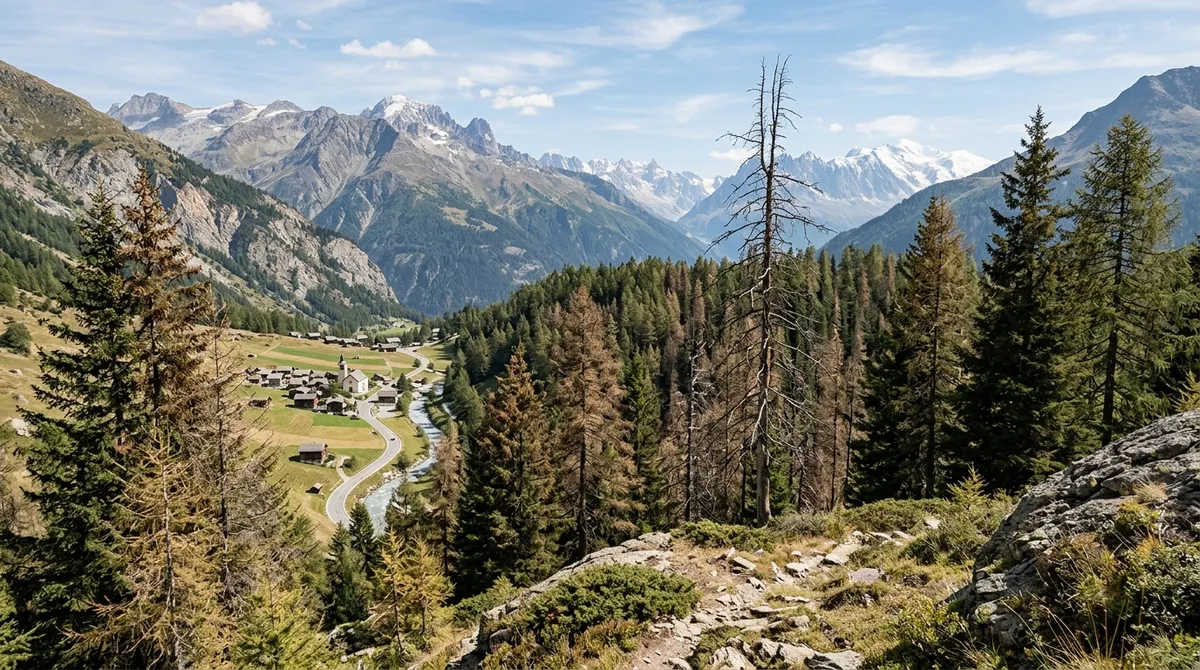
Recent research from Swiss scientists has revealed alarmingly that high-altitude forests, once presumed resistant to drought, are deteriorating due to climate change. Specifically, trees at elevations as high as 2,200 meters are now showing signs of significant stress. This shift has serious implications for mountainous communities that rely on these forests for their natural defenses against avalanches, rockfalls, and floods.
The Decline of High-Altitude Forests
Traditionally, high-altitude forests in the Alps were viewed as a barrier to natural hazards. Their majestic, towering trees have provided stability to slopes and reduced the risk of possible land and rock slides. However, a new study has shown that with escalating summer droughts, many trees are succumbing to these harsh conditions, compromising their ability to protect the valleys below.
The study highlights a worrying trend: as global temperatures rise and precipitation becomes increasingly erratic, even the highest-elevation forests that once enjoyed protection from drought are no longer immune. The trees that anchor the landscape are weakening, thus making the situation more precarious for those living beneath the slopes.
Understanding the 'Altitude Paradox'
One might wonder why high-altitude forests, previously deemed safe from the dangers of drought, are now in jeopardy. This paradox stems from several factors, including changing weather patterns that shift not just temperature, but also moisture availability. Consecutive years of insufficient rainfall have led to cumulative stress on the trees, diminishing their resilience and overall health.
Moreover, as the climate continues to warm, the underlying assumptions about ecosystem resilience are being challenged. A forest that could once withstand environmental challenges is now facing unprecedented stress, leaving communities vulnerable.
Protecting Communities Through Adaptive Forestry
In light of these findings, immediate adaptive forestry strategies are essential. Engaging with local foresters and ecologists, efforts are underway to develop sustainable management practices that can help restore resilience in weakened forest stands.
This could involve selective logging to remove diseased or weaker trees, replanting native species better suited to endure longer droughts, and fostering biodiversity to enhance ecological stability.
Such initiatives can help ensure that forests continue to play their critical role in protecting the valleys and can mitigate the risks associated with natural hazards.
A Broader European Issue
The plight of Swiss high-altitude forests is not an isolated incident; it reflects broader ecological threats facing mountainous regions across Europe. The decline of these vital ecosystems underscores the need for increased regional collaboration on climate adaptation strategies. More often than not, a problem facing one region can quickly resonate across geographical boundaries, creating a ripple effect.
The Human Element
The implications of this forest crisis extend beyond environmental science. Mountain communities are deeply interconnected with the health of their surrounding environments. As forests decline, valley residents experience changing relationships with these once-stalwart natural barriers. Understanding their perspectives will be crucial for developing effective responses.
Involving local voices in the conversation can help tailor adaptive strategies, ensuring they remain relevant and effective for the communities most impacted.
Conclusion
The decline of high-altitude forests in Switzerland is a wake-up call for the Alpine regions and beyond. As temperatures rise and precipitation patterns shift, the protective infrastructure provided by these forests is in jeopardy. By learning from this study and implementing adaptive forestry practices, we can work to safeguard both the ecology and the communities that depend on it for their safety. The time for action is now—forest resilience lays at the heart of community safety.